

Small rooms, shared walls and flatmates on different schedules can make a university residence feel like the last place to keep playing piano. The direct answer is yes, you can: a portable digital piano with a headphone jack lets you practise at any hour without disturbing anyone. Headphones do the quiet work, and the portable size solves the space problem — the piano fits a desk corner, a wardrobe, or a trip home for the holidays.
Here is what to look for in a dorm-friendly piano, five current Donner options ordered from most portable to closest to a real piano feel, and a few considerate practice tips for shared living.
Why a Digital Piano Works in a University Residence
A digital piano becomes a silent practice instrument the moment you plug in headphones. You hear the piano clearly; your roommates hear almost nothing, at most a faint mechanical click from the keys. That one feature removes the biggest obstacle to daily practice in a shared residence, and it works as well at midnight as it does at midday.
Portability is the second half of the answer. A slab-style digital piano with 88 full-size keys takes up little more room than a desk, and it can be moved to a shared practice corner, stored against a wall, or packed for the holidays. An acoustic piano, by contrast, is heavy, needs regular tuning, and projects its sound through a soundboard into the whole building — a digital piano has a volume control and no acoustic soundboard, so the sound goes exactly where you point it.
One honest note before you plan your routine: a headphone jack does not override residence rules. Quiet hours and house agreements still apply, so check your contract and ask your flatmates what works for them. The piano simply makes it easy to stay inside those limits.
What to Look for in a Dorm-Friendly Portable Piano
A handful of decisions separate a piano that fits residence life from one that stays in its box. Compare size and weight, the keyboard, the headphone output, connectivity for learning apps, and what arrives in the box — each one changes how the piano fits your room and your practice routine.
| What to check | Why it matters in a residence |
|---|---|
| Size and weight | A foldable or very light model is easier to store and to move between rooms or home for holidays. |
| Full-size 88 keys | The keyboard stays familiar if you already play or plan to progress. |
| Key action | Semi-weighted keys are lighter and cheaper; fully weighted keys feel closer to an acoustic piano. |
| Headphone output | The key feature for silent practice — check the model spec before buying. |
| Bluetooth | Audio and MIDI let you use learning apps without cables. |
| Extras | A battery option helps when sockets are scarce; an included stand or bag means you can start right away. |
There is no perfect balance for everyone. A foldable model trades some key feel for storage space, while a weighted model trades weight for a closer piano touch — so choose the trade-off that matches your room and how often you plan to move the piano.
Five Dorm-Friendly Donner Pianos from the Current Sale
These five Donner pianos from the current sale are ordered from the most portable to the closest to a real piano feel, so you can read them top to bottom as your space shrinks or your playing ambitions grow. Each one targets a different residence scenario; none of them is the right fit for every student.
Donner DP-10 Foldable Digital Piano Best for tiny rooms and easy storage

Features
- Folds to about 62.8 cm and weighs about 3.5 kg — easy to store or take along.
- 88 semi-weighted keys with 128 tones and 128 rhythms.
- Headphone jack for silent practice at any hour.
- Rechargeable battery with around 10 hours of play and USB-C charging.
- Sustain pedal, music rest and carrying bag included.
The Donner DP-10 Foldable Digital Piano is the answer for the smallest rooms. It folds down to a compact length of about 62.8 cm and weighs about 3.5 kg, so it slips into a wardrobe or a corner between study sessions and travels in the included carrying bag.
The full 88-key layout stays intact with semi-weighted keys, 128 tones and 128 rhythms, and the headphone jack covers quiet practice. The rechargeable battery gives around 10 hours of play with USB-C charging, while Bluetooth audio and MIDI connect the piano to learning apps.
Donner DEP-1 Portable Digital Piano Best lightweight budget option
Features
- 88 velocity-sensitive keys with 128 tones.
- About 7 kg — easy to move or store in a small room.
- Headphone jack for silent practice (headphones sold separately).
- Bluetooth for connecting to learning apps.
- X-stand, sustain pedal and carrying case included.
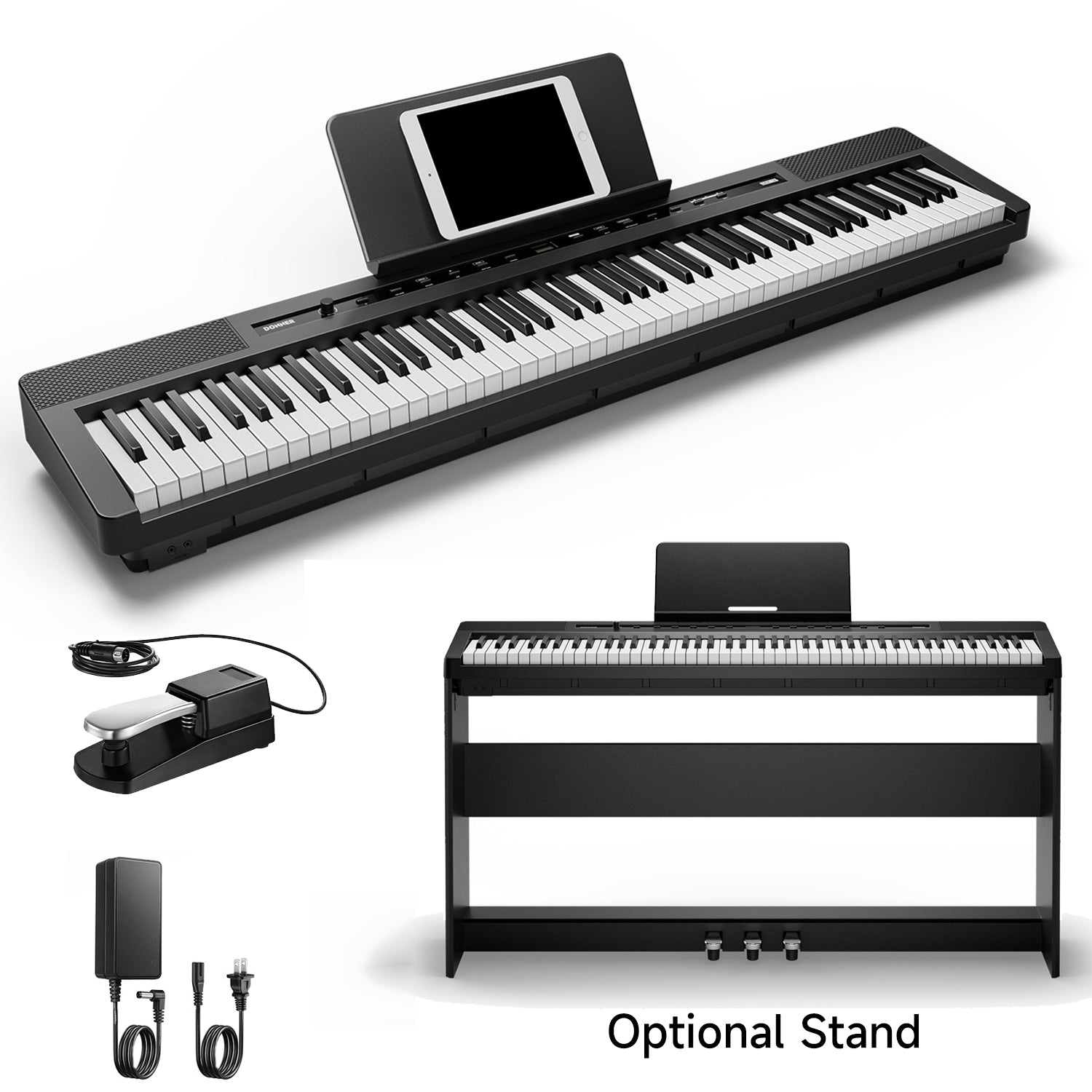
The Donner DEP-1 Portable Digital Piano is the budget pick for a student who wants an 88-key piano without spending too much or wrestling heavy gear. At about 7 kg it is easy to move between your desk and a shared practice space, or to store against a wall.
The headphone jack keeps practice silent (headphones are sold separately), and Bluetooth connects the piano to learning apps on your phone or tablet. The 88 velocity-sensitive keys respond to how hard you play, and the box includes an X-stand, a sustain pedal and a carrying case.
Donner DEP-1S Digital Piano Kit with X-Stand Best compact beginner kit

Features
- 88 semi-weighted velocity-sensitive keys with 128 voices.
- Slim, lightweight design in a retro wood finish.
- Bluetooth audio and MIDI for learning apps.
- 100 rhythms and 88 demo songs for varied practice.
- Adjustable X-stand, sustain pedal and key stickers included.
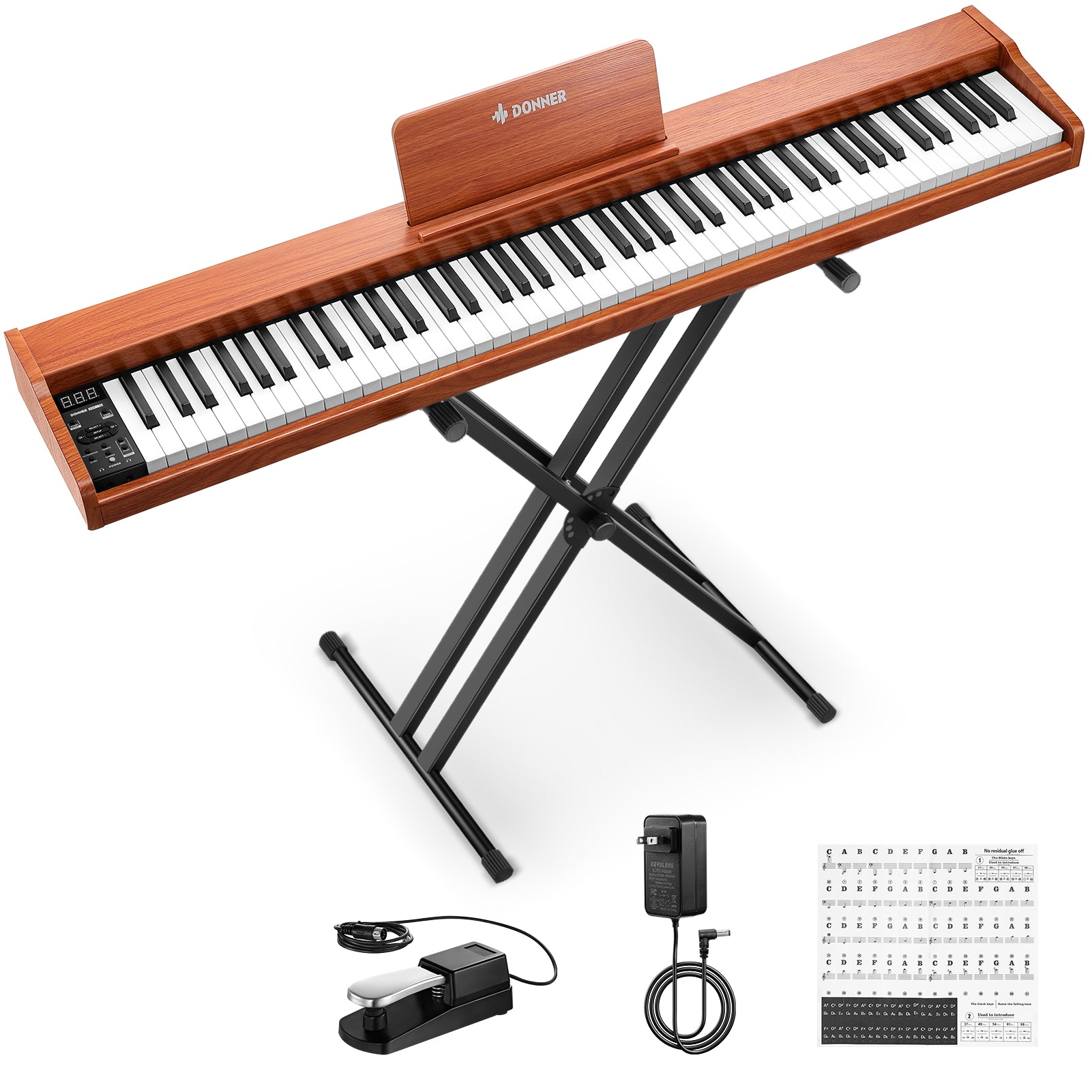
The Donner DEP-1S Digital Piano Kit with X-Stand suits a beginner who wants a slim piano that looks at home in a small room. Its lightweight design and retro wood finish take up little visual and physical space, and the adjustable X-stand and sustain pedal are included, so there is nothing extra to buy before the first session.
For learning, Bluetooth audio and MIDI connect the piano to apps on your phone or tablet, and the 88 semi-weighted velocity-sensitive keys respond to your touch. With 128 voices, 100 rhythms and 88 demo songs there is plenty to keep practice varied, and the key stickers in the box help with note names at the start.
Donner DEP-16 88 Key Weighted Portable Digital Piano for Beginner Best weighted portable option

Features
- 88 fully weighted keys with 238 tones and 200 rhythms.
- Headphone socket for quiet practice.
- Bluetooth audio and MIDI plus USB-MIDI.
- 128-note polyphony and a built-in LCD display.
- 100 demo songs and six metronome types for structured practice.
The Donner DEP-16 88 Key Weighted Portable Digital Piano for Beginner gives you the feel of a real piano in a slab you can still move around the residence. The 88 fully weighted keys respond like an acoustic action, and the headphone socket makes the same instrument completely quiet for late-night practice.
It is also a capable practice partner on its own: 238 tones, 200 rhythms, 128-note polyphony and a built-in LCD display cover varied sessions, while 100 demo songs and six metronome types support structured practice. Bluetooth audio and MIDI plus USB-MIDI connect it to apps and software.
Donner DEP-20 Weighted Digital Piano Best piano-like feel

Features
- 88 weighted keys with 238 tones and 128-note polyphony.
- Headphone output (6.5 mm) for silent practice.
- Detachable keyboard so the slab can be moved on its own.
- At least 25 W x 2 output power for full sound when playing aloud.
- Furniture stand and 3-pedal unit included.
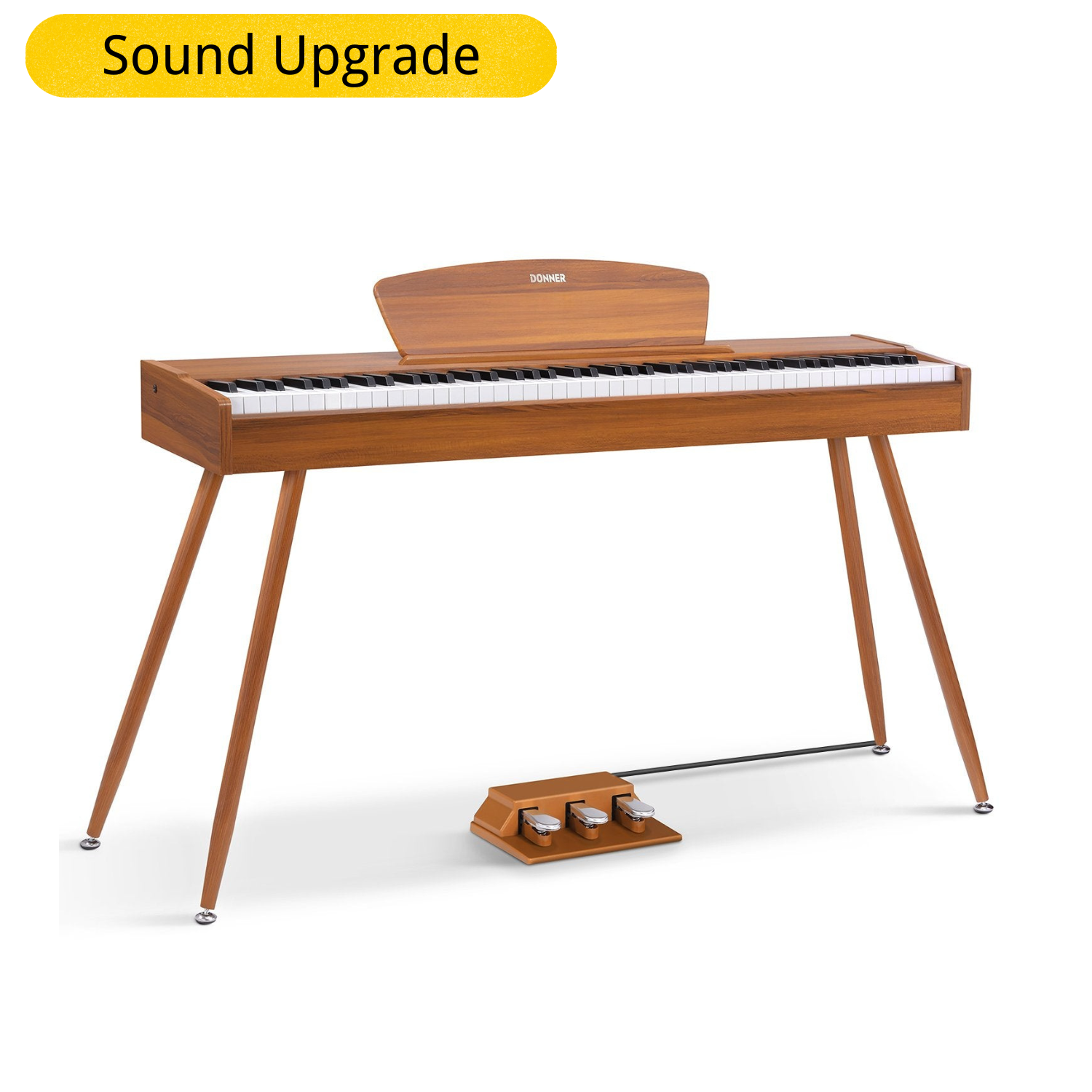
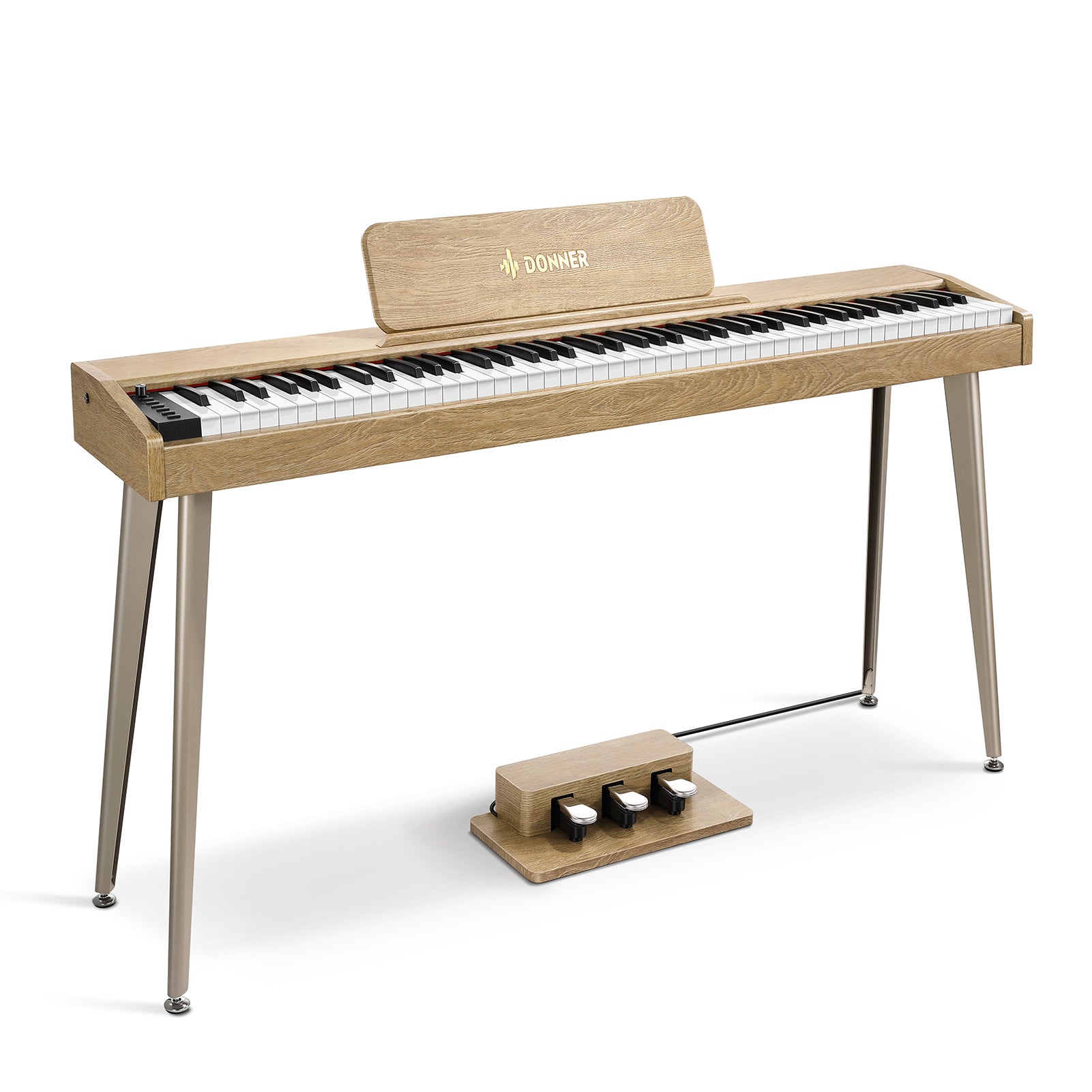
The Donner DEP-20 Weighted Digital Piano is the closest thing to a real piano in a residence room. Its 88 weighted keys, furniture stand and 3-pedal unit recreate the full instrument, while the detachable keyboard means you can still lift the slab out on its own when you need the space.
Quiet practice comes from the 6.5 mm headphone output, and when you can play aloud, the speaker output (at least 25 W x 2) fills the room properly. With 238 tones and 128-note polyphony, it covers everything from scales to full pieces.
Practising Quietly Without Disturbing Your Roommates
Closed-back over-ear headphones are the most reliable way to practise considerately: they keep the sound private and block outside noise, so a late session stays between you and the music. For the rest, small habits make the difference.
- Keep the volume low when playing aloud.
- Agree practice times with flatmates so everyone knows when to expect music.
- Put a thick rug or mat under the stand — the key action still makes a mechanical thud even at zero volume, and the mat absorbs the vibration.
- Place a small pad or foam under the sustain pedal, which can thump on hard floors when released quickly.
Residence rules differ, so check your tenancy agreement or house rules for quiet hours and any instrument restrictions before you set a fixed routine — then confirm the plan with your flatmates. Most rooms find a compromise everyone can live with.
If your room is tiny and you move often, a foldable or light model like the DP-10 or the DEP-1 keeps practice possible without taking over your space. If the piano feel matters more, the weighted DEP-16, or the DEP-20 with its furniture stand, brings the real instrument into your room — and a headphone output keeps either one quiet. Match the trade-offs to your room, and the current Donner sale offers are the quickest way to find your model.