


When searching for an affordable 88-key digital piano, many players in North America find themselves comparing DEP-20 vs DDP-95. While both models offer weighted keys, three-pedal setups, and full-size keyboards, they are designed for different playing needs and lifestyles.
In this guide, we’ll compare DEP-20 and DDP-95 across keyboard feel, sound, features, learning experience, and physical design—so you can confidently choose the piano that fits your space and goals.
Keyboard Action & Playing Feel
DEP-20: Balanced, Responsive, and Widely Praised
The DEP-20 features a fully weighted hammer-action keyboard with 4 adjustable touch sensitivity levels, allowing players to customize the response to their playing style.
Many customer reviews highlight that the DEP-20 offers a natural and comfortable key feel, making it especially enjoyable for extended practice sessions. The action feels balanced across the keyboard, supporting both beginners building technique and intermediate players refining expression.

DDP-95: Consistent and Adjustable
The DDP-95 is equipped with an 88-key hammer keyboard and offers 16 levels of touch sensitivity adjustment. This wide range allows users to fine-tune responsiveness based on preference or learning needs.
While both models deliver an authentic weighted feel, the DEP-20 stands out as a classic model whose keyboard action has received many positive comments from customers, especially among players focused on pure piano performance.
Key takeaway: Both offer true weighted action, but the DEP-20 is frequently preferred by players who prioritize key feel and long-term playability.
Sound Engine: Tones, Rhythms & Polyphony
DEP-20 Sound Capabilities
- 238 instrument tones
- 200 accompaniment rhythms
- 100 demo songs
- 128-note polyphony
The DEP-20 focuses on essential, practical sounds—from acoustic piano to bass, drums, and ukulele—covering most practice and performance scenarios without overwhelming new users.
DDP-95 Sound Capabilities
- 610 instrument tones
- 600 rhythms
- 110 demo songs
- 128-note polyphony
With a much larger sound library, the DDP-95 is ideal for users who enjoy experimenting with different musical styles or need variety for teaching and accompaniment.

Learning & Practice Features
DEP-20: Performance-Oriented Versatility
The DEP-20 includes a wide range of creative and performance-focused tools:
- Dual voice & dual keyboard modes
- Single-finger and multi-finger chords
- Sync start and tempo control
- Metronome and DSP effects
- Transpose, recording, and keyboard drum mode
- MP3 playback
- Backlit LCD display for settings
These features make the DEP-20 a strong choice for players who want flexibility for practice, composition, and casual performance.
DDP-95: Built for Guided Learning
The DDP-95 is designed with beginners and students in mind, offering:
- 3 built-in teaching modes
- Oversized 4.3-inch blue-light LCD that displays staff notation and key positions
- Bluetooth MIDI and audio connectivity
- Compatibility with the Donner Music App for structured lessons
The visual learning system helps new players understand notes and finger placement more intuitively.

Speaker System & Sound Projection
- DEP-20: Dual 25W speakers
- DDP-95: Dual 15W speakers
The DEP-20 delivers stronger volume and fuller sound projection, making it suitable for larger rooms or small gatherings. The DDP-95 provides balanced, controlled output optimized for home practice environments.

Design, Materials & Size
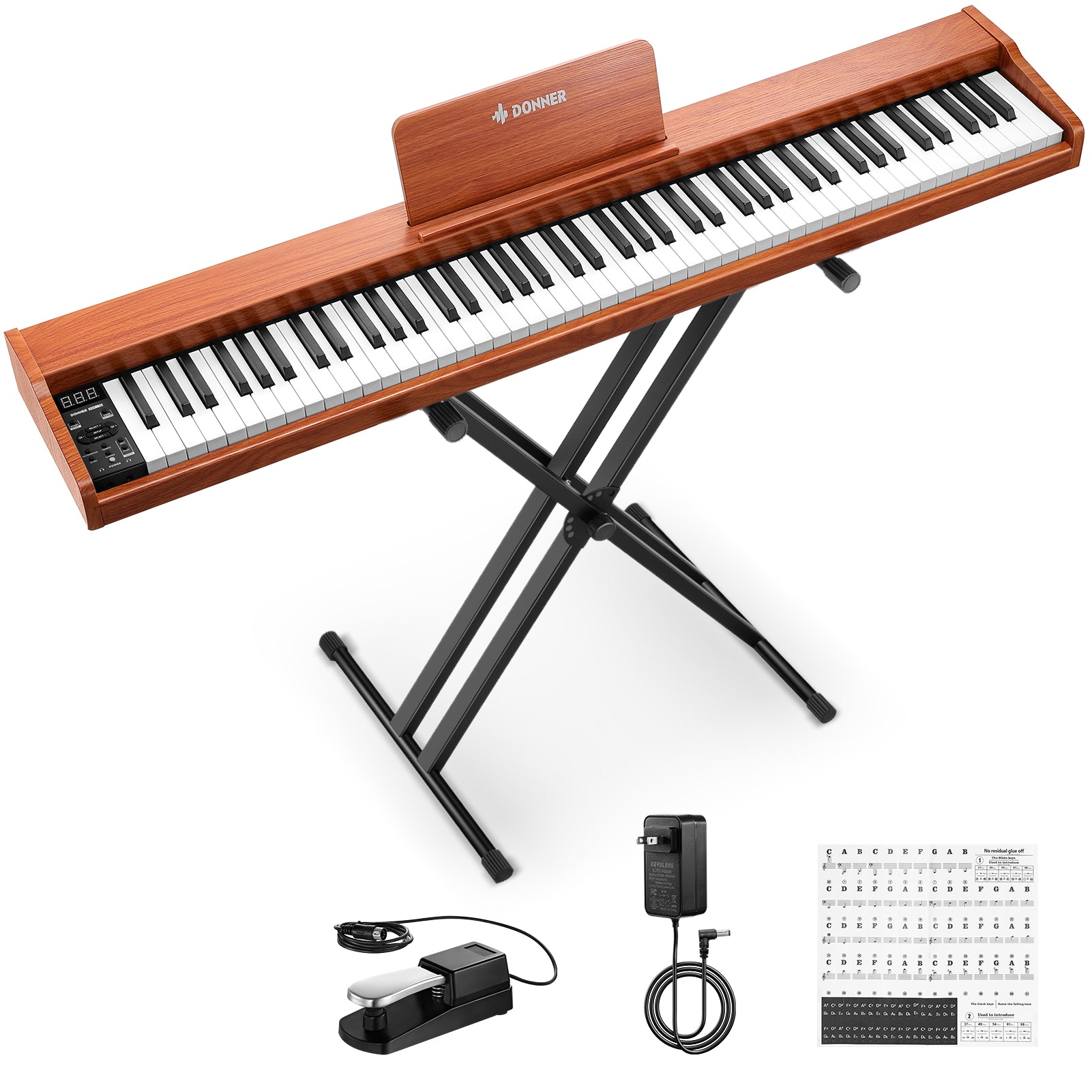
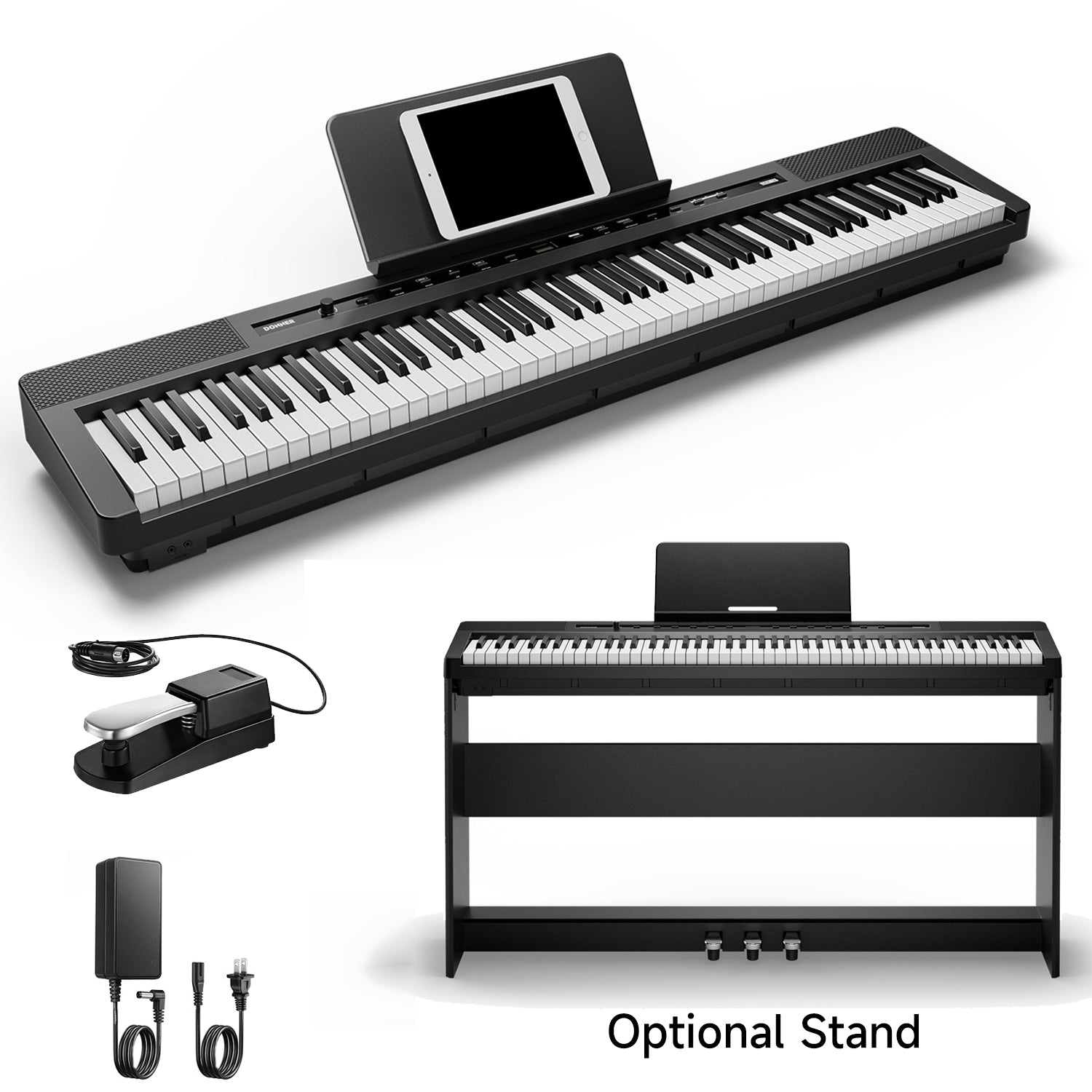
DEP-20 (With Stand)
Dimensions: 52 × 11.6 × 29.9 inches
Streamlined design with a smaller footprint and easier placement
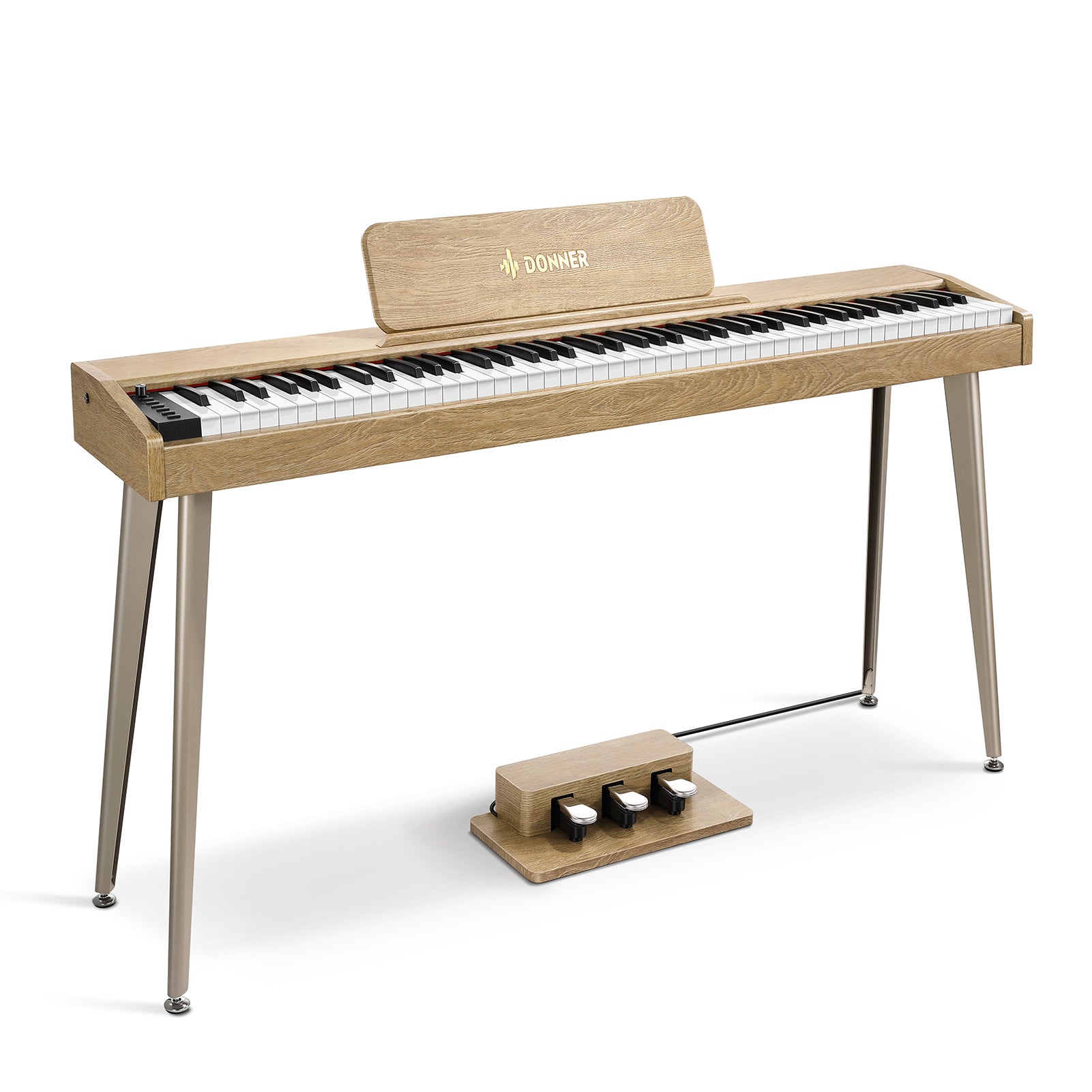
DDP-95
Dimensions: 49.8 × 13.7 × 30.2 inches
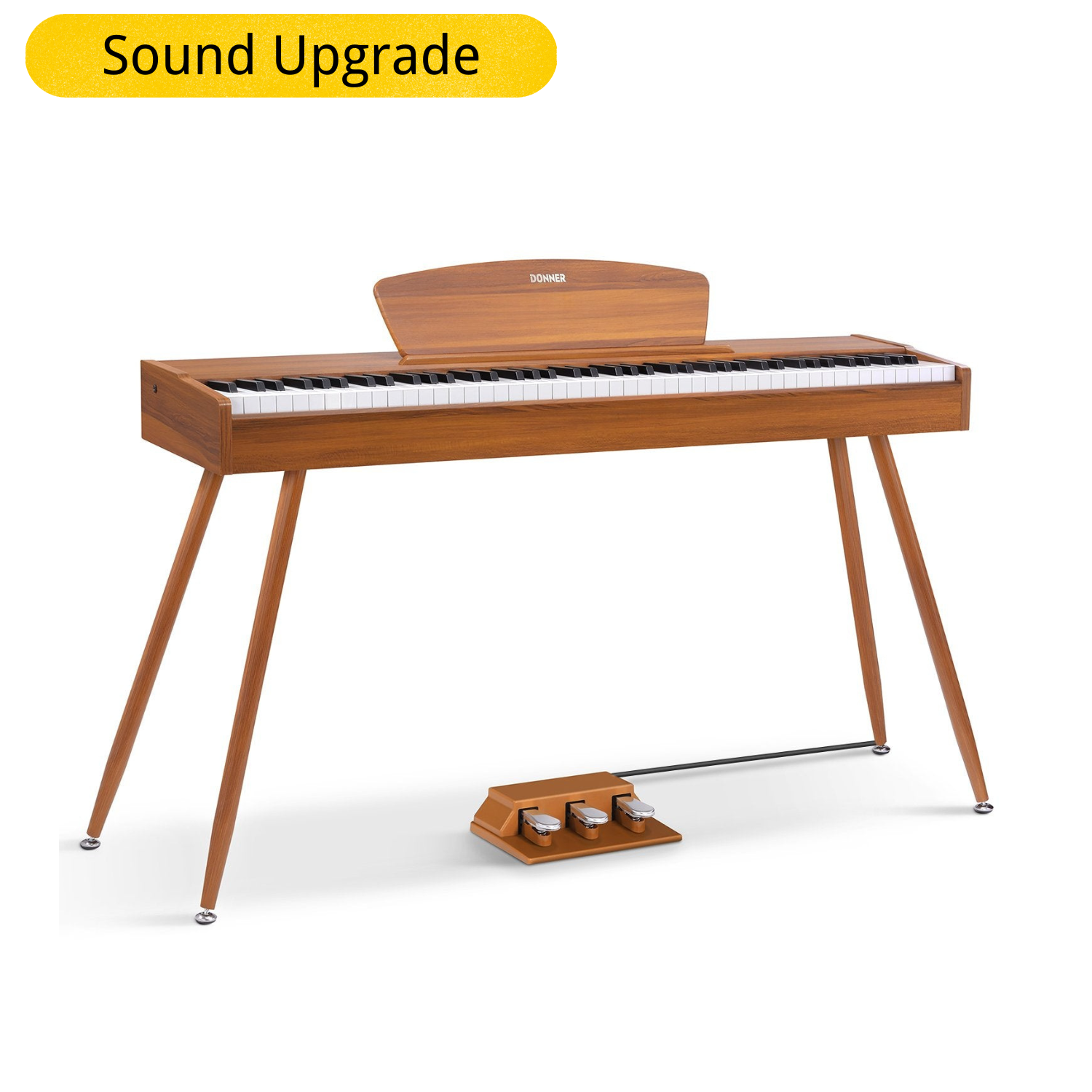
Traditional upright-piano look that blends naturally into home décor
If portability or flexible room layout matters, the DEP-20 has an advantage. If you prefer a classic furniture-style appearance, the DDP-95 stands out.
Connectivity & Controls
Both models support:
- Headphone output for silent practice
- Audio in/out
- USB-MIDI for DAWs and learning software
The DDP-95 adds Bluetooth MIDI and audio, while the DEP-20 keeps things straightforward with a physical control-focused interface.
Final Thoughts: DEP-20 or DDP-95?
Choose DEP-20 if you:
- Care most about key feel and playing comfort
- Want stronger speakers and performance flexibility
- Prefer a lighter, more adaptable setup
- Focus on practice, creativity, and general piano playing
Choose DDP-95 if you:
- Are a beginner looking for guided learning support
- Value on-screen notation and visual instruction
- Want a traditional upright-style digital piano
- Enjoy exploring a wide range of sounds and rhythms
Both are capable 88-key digital pianos—the best choice depends on whether your priority is playing feel and versatility or structured learning and visual guidance.
Ready to Choose Your Digital Piano?
Both DEP-20 and DDP-95 are thoughtfully designed 88-key digital pianos, each serving different playing needs—from flexible home practice to guided learning setups.
If you value a classic playing feel and versatile performance features, the DEP-20 is a reliable choice. If your focus is structured learning with visual guidance, the DDP-95 may be the better fit.

👉 Explore detailed specifications, accessories, and current availability on the official Donner website:
Bring music into your home with the digital piano that matches your space, your goals, and your playing style.