

The best starting point for choosing a digital piano is the job you want it to do. This guide connects that task with key response, listening, physical format and the actual audio or MIDI connections you need.
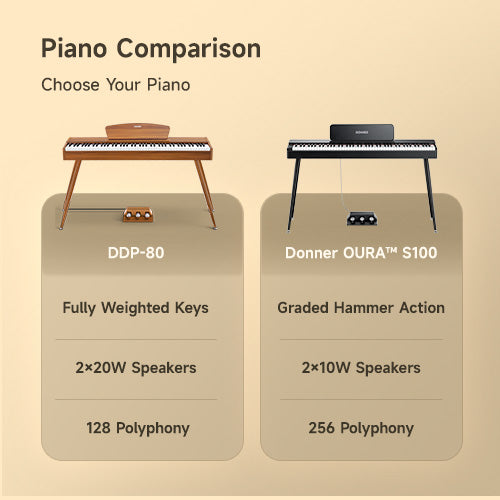
The three model examples illustrate different configurations rather than ranked winners. Comparing the whole setup keeps a model-only offer distinct from a complete home or connected practice station.
Table of Contents
- Choose the Main Job for the Instrument
- Choose Key Range and Response for the Music
- Choose the Physical Format and Pedal Arrangement
- Listen to the Sounds and Functions You Need
- Map the Actual Audio and MIDI Route
- Compare Complete Configurations
- Remaining Questions Before Buying
- Choose the Workflow You Can Actually Use
Choose the Main Job for the Instrument
Choose the main task: quiet home practice, lessons, exploring sounds or playing through external equipment. Note the space, whether the instrument stays assembled and which devices are genuinely part of that activity.
Separate those requirements from optional extras. The shortlist should make your intended playing routine possible before it expands into other uses.
Choose Key Range and Response for the Music
An 88-key keyboard provides the acoustic piano's full range. Fewer keys change the notes available, not the physical action. Use the music you intend to play to decide which range fits.
Velocity sensitivity controls how playing force affects the sound. Weighting is physical resistance, while graded hammer action varies that resistance across the range. Try a quiet phrase and repeated notes where possible, then record the response you prefer on the exact instrument.
Donner DDP-80 PLUS Focused Acoustic-Piano Practice

Pros
- Weighted hammer action
- Three distinct pedal functions
Cons
- Only one instrument tone
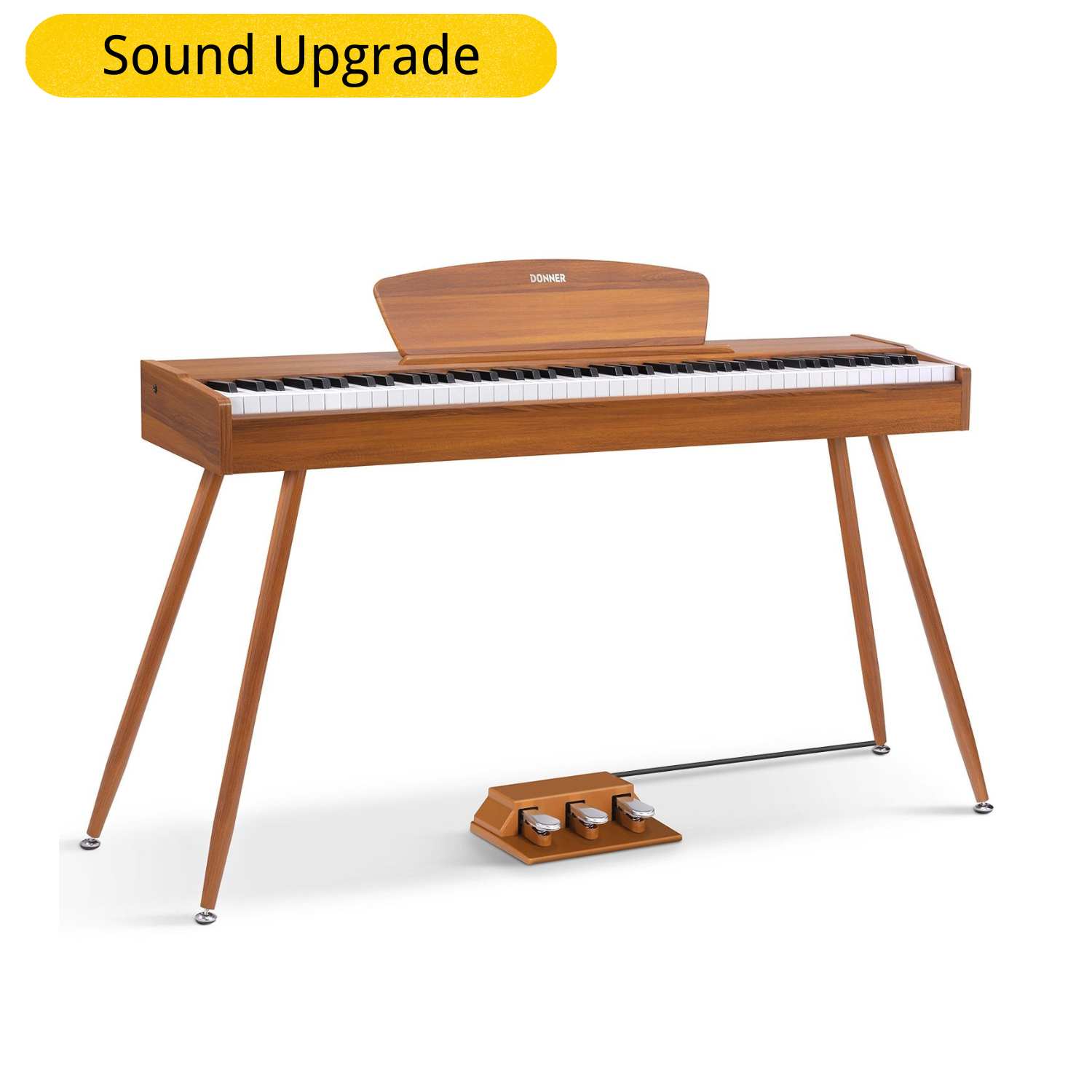
For a home workflow centred on piano pieces rather than a large sound library, Donner DDP-80 PLUS digital piano combines 88 progressively weighted hammer-action keys with a single piano voice. The furniture support and metal three-pedal unit make it a fixed-station choice. Its suitability starts with that playing task and a place where the setup can stay ready.
The metal three-pedal unit provides damper, sostenuto and soft functions; sostenuto holds selected notes already played. Built-in stereo speakers, a headphone socket, AUX output and USB-MIDI support different listening and connection tasks. The single voice suits focused piano work but is a limitation if you want a broad sound palette.
Choose the Physical Format and Pedal Arrangement
Compare a cabinet left ready with a separate keyboard on stable support. Include the seat and foot space, and identify the actual pedal functions in the chosen option.
A stage label does not establish built-in speakers or a complete home support system. Choose the format by the room and listening arrangement it must serve.
Donner DDP-200 MK2 Dedicated Piano Station

Pros
- Graded hammer action
- Three-pedal furniture setup
Cons
- 34.5 kg furniture instrument
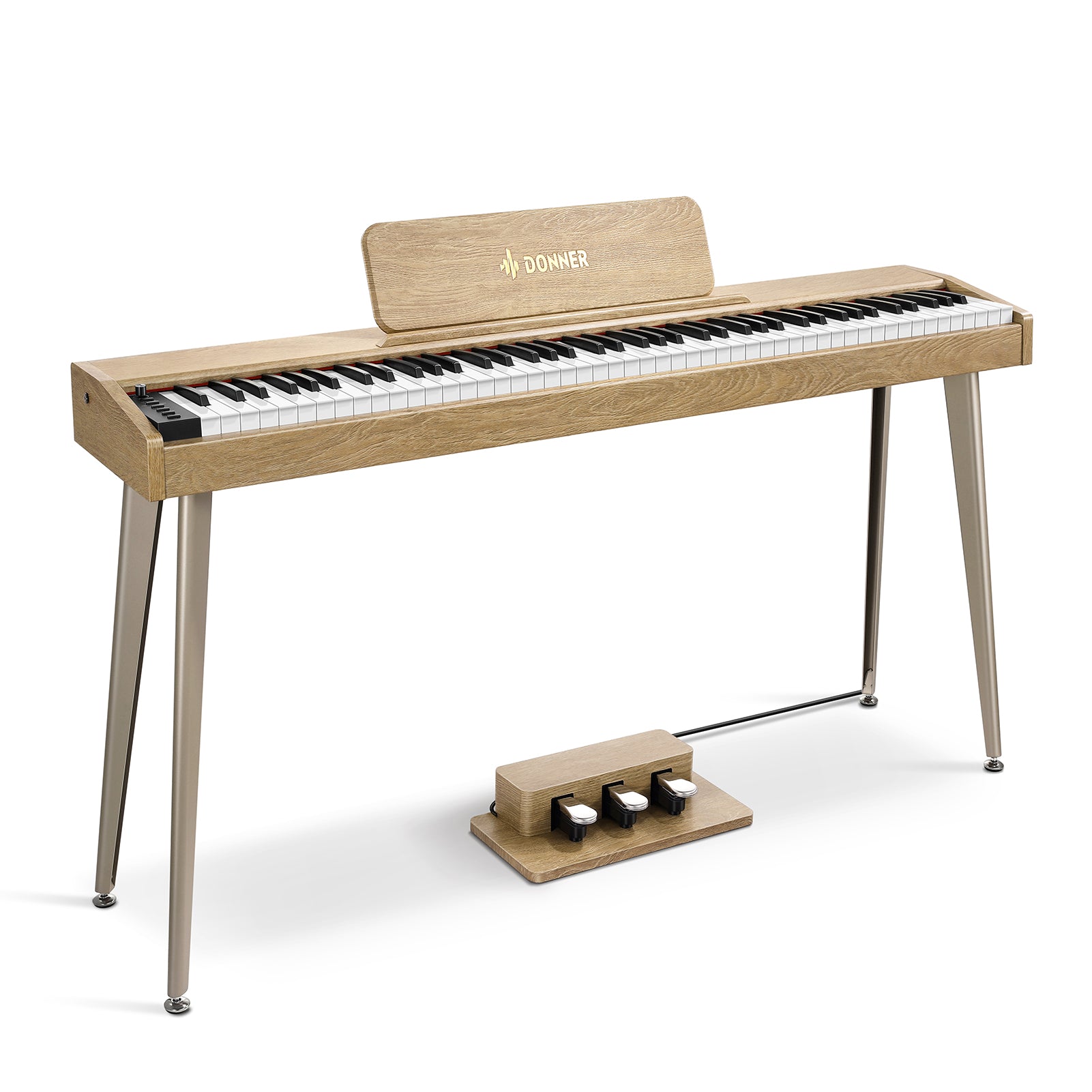
For a playing task centred on regular piano practice or teaching side by side, Donner DDP-200 MK2 digital piano offers 88 graded hammer-action keys and an equal-range teaching mode. Two 6.35 mm headphone outputs give that shared task a practical listening route. The furniture setup should be evaluated as a complete fixed station.
Two 6.35 mm headphone jacks allow both people to listen privately and bypass the internal speakers when headphones are inserted. The MK2 configuration includes the furniture support, anti-tip brackets and triple-pedal assembly. At 34.5 kg, it is a furniture instrument to place deliberately rather than move after each session.
Listen to the Sounds and Functions You Need
Play the same short passage through the speakers and intended headphones. Decide whether you enjoy the main piano sound before counting the other voices.
Sound variety, layering and practice functions may be useful for your task. A higher voice count describes options, however, rather than assigning a quality score to the piano tone.
Donner DEP-20 Weighted Keys With Variety

Pros
- Weighted hammer action
- 238 instrument tones
Cons
- Furniture assembly required
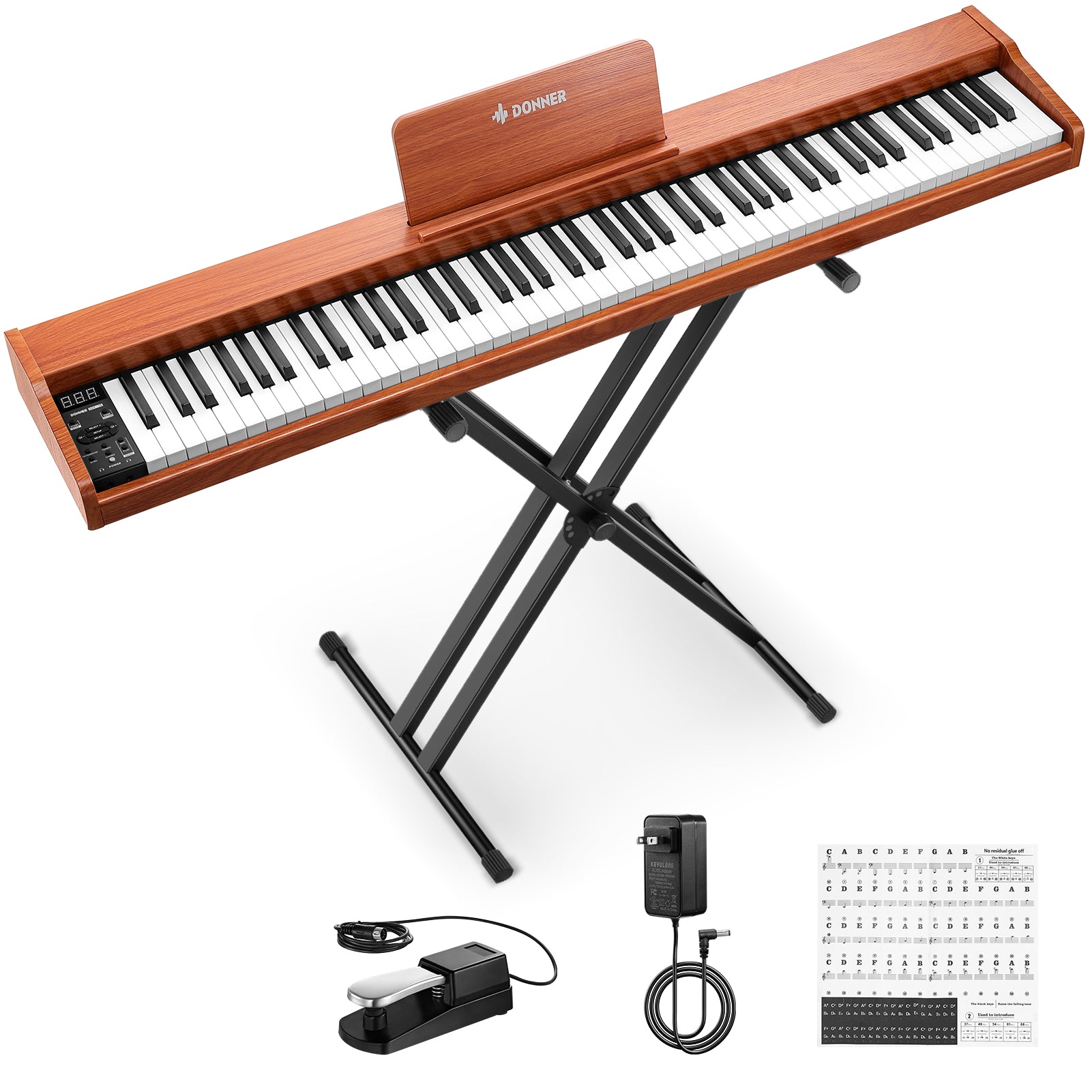
If the main task includes layering sounds as well as piano practice, Donner DEP-20 digital piano combines 88 hammer-action keys with 238 tones. It illustrates why sound variety and physical key response can be chosen together. The selected furniture configuration should then be judged by the space and support needed for the complete station.
Adjustable touch response changes the sound's reaction to your playing, and dual-tone layering combines two voices for an arrangement. A backlit LCD helps with selecting tones and functions. The selected configuration adds furniture support and three pedals. It provides a fixed playing position but requires assembling and placing the furniture.
Map the Actual Audio and MIDI Route
Map each connection to one task: private listening, accompaniment playback, sending performance data or recording piano audio. MIDI carries instructions about your performance, not the sound waveform.
For external speakers or a PA system, match the piano's documented audio output to the receiving input. A product category or USB socket does not establish that route on its own.
Compare Complete Configurations
List the support, seat, pedals, power supply and listening or connection equipment needed for each configuration. Mark supplied and already-owned items, then add only what is missing.
Compare the resulting setups for the same purpose and try the everyday controls. This gives you a meaningful complete cost rather than a total built from unlike bundles.
Remaining Questions Before Buying
Does a USB Socket Charge a Phone?
Not automatically. A socket documented for MIDI or audio does not establish that it supplies the power a phone needs. Use the exact manual’s supported connection and power information rather than treating every USB port as a charger.
Will the Piano Need Acoustic Tuning?
No regular string tuning is needed because the sound is generated electronically. Electronic pitch adjustment is a different function. A faulty key, pedal, connector or power supply can still require attention.
Choose the Workflow You Can Actually Use
Return to the main playing task and choose the action, listening route and complete configuration that support it. Confirm the exact option against your equipment list before purchasing, leaving out features that have no job in your routine.