

Jimmy Loop has been playing live for 12 years, most of it alone on stage with a guitar, a voice and an iPad. We invited Jimmy Loop to take the Donner HUSH I PRO on the road and tell us what it replaced.
He wasn't expecting much. A guitar that changes how you pack, how you play and how your back feels after a load-in sounds like a brochure line. 3 years on, he describes it as the biggest change he's made to his working setup.
Donner HUSH I PRO Travelling players

Pros
- Takes over from a pedalboard
- Travels in one bag
- Effects built into the guitar
- Recharges over USB-C
- Easy on your back
The Donner HUSH I PRO electric guitar starts from a headless travel design with acoustic-electric voicing, so it plays like a full-size instrument you can still carry. Battery inside, USB-C charging, and delay, reverb, compression and distortion on board.
Loop has been using it since he went looking for a guitar he could fly with, and the pros below are the ones he calls out in his own review of the instrument.
The Load-In Problem
If you tour for a living, you know the routine at the gate. There's an extra fee for the instrument, a scramble for overhead space, and the quiet worry that it turns up damaged, or doesn't turn up at all. Loop was planning a trip that would keep him in Mexico and Europe for months, and he needed a guitar he could take with him.
The guitar he was touring with weighed around 8 kg, and carrying it had started to take a toll on his back. That's what turned a vague idea into a search for a travel guitar.
What We Sent Him
Loop came across the HUSH I PRO, got in touch about our ambassador programme, and we agreed on a collaboration that let him use the instrument and make content with it. He says he had no idea how much of his rig it would make redundant.

The parts that mattered to him are the ones that travel badly. Rather than living in a board, the delay, reverb, compression and distortion sit inside the guitar, and it charges over USB. The effects he used to carry in a case could stay at home.
The One-Bag Rig
For years his sound came out of pedalboards, pedals and cables. He sold that gear off piece by piece, he says, and started rebuilding around fewer parts. It's a slower decision than it sounds when the old rig still works.
An iPad running Loopy Pro took over the loops, drums and piano parts from a single device, and a small MIDI keyboard came along with it. These days a guitar, a tablet, a keyboard and a handful of accessories do the job of a case of equipment.

The first improvement he mentions isn't musical. He doesn't finish a show with a sore back any more.
On Stage and On Tour
The guitar has been with him through Spain, Portugal, England and France. The weight, the fees and the logistics of moving a big instrument stopped dictating his plans.
Something less practical happened too. People started asking what the guitar was. There's nothing conventional about the shape, and Loop says it became part of the show rather than an instrument nobody notices.
In high season he plays 3 to 6 shows a week, building each one live from guitar, vocals, electronic percussion, piano and virtual instruments. The guitar is the piece the rest hangs off.

A while later we sent him a HUSH X PRO. It's an electric guitar, so it handles the solos and the harder passages in a set that would otherwise stay acoustic.
Donner HUSH X PRO Solo and lead work

Pros
- DXP amp modelling built in
- IR import available
- Slim C-profile neck
- Donner Alnico V pickups
- Tool-free headless frame
Cons
- Battery needed for effects
The Donner HUSH X PRO electric guitar is the most feature-heavy model in the line. Its DXP processor handles amp modelling, IR import and seven tone simulations, all from one knob and an OLED display, with a tuner built in for quick checks on stage.
You get a mahogany body, a slim C-profile neck, rounded jumbo frets in stainless steel, a 25.5-inch scale and Donner's own Alnico V pickups. The headless frame comes apart without tools. Loop reaches for it whenever a set needs solos or a harder edge, and he says much of his current sound runs through it.
Then came a HUSH C, our nylon-string classical model. It's the one he takes when a performance wants a gentler sound, and the fact that it has none of the onboard effects is exactly why it works there.
Donner HUSH C Acoustic sets

Pros
- Classical nylon-string voice
- Feedback-resistant on stage
- Silent headphone practice
- Bag and headphones included
- Comfortable satin neck
Cons
- No onboard effects
- Nylon strings need settling
The Donner HUSH C electric guitar adds a nylon-string classical voice to the range in a headless body you can fit in a backpack. Okoume wood, a neck-through build reinforced with carbon fibre, a satin finish, a 25.5-inch scale and a 46 mm nut.
HUSH's custom piezo works with the HPS-II system, so you get a natural nylon tone, a two-band EQ, a tuner with a low-battery warning and a headphone out for quiet practice. Loop keeps it for the sets that want something softer, and it carries none of the effects the other two do.
Why It Stuck
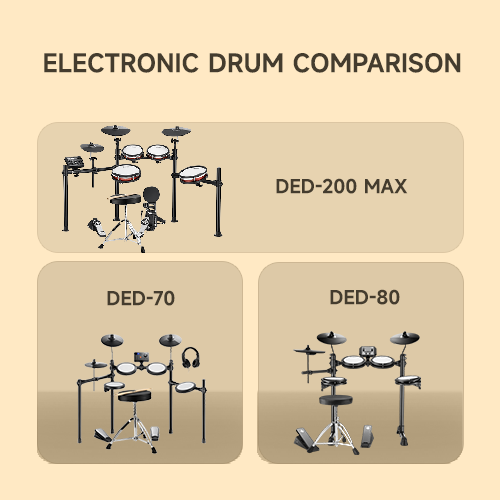
Almost every guitar he owned before this one is gone. The HUSH models stayed, because they're the ones that fit the way he works. Our electronic drum set has since joined the same setup.
What he values, he says, is the balance between quality and price. Not every musician can drop thousands on gear, and an instrument that holds up night after night matters more than a premium badge.
What Changed for Him
His own summary is that this was never really about buying a guitar. Loop describes it as a shift in two things at once: how he plays, and how he gets from one city to the next. Less to carry, a back that doesn't ache, and a show that packs into fewer cases.
The smaller rig changed his working day, too. With no pedalboard to babysit, he says the setup goes up faster and takes less thinking about, which leaves more room for the music.

For anyone who travels or plays constantly, his advice is simple: he points other musicians to the HUSH guitars, and he expects they'll keep shaping how his music gets around the world.
Questions Players Ask
Can a travel guitar replace a pedalboard?
In Loop's case, it did. The HUSH I PRO has delay, reverb, compression and distortion built in, which he says covered everything he used to run through a board. He sold the board off piece by piece and never rebuilt it.
How heavy is the HUSH I PRO?
Ours comes in at 2.2 kg and gives you roughly 8 hours of playing per charge over USB-C. The electric guitar Loop used to fly with was around 8 kg.
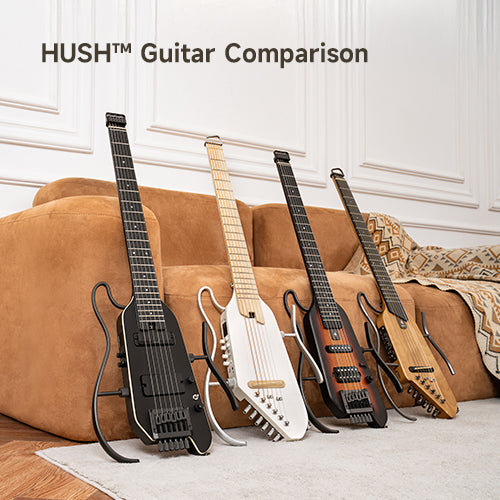
What's the difference between the HUSH I PRO, HUSH X PRO and HUSH C?
The HUSH I PRO is the acoustic-electric travel model with the effects built in. Loop uses the electric HUSH X PRO for solos and heavier sounds. Our nylon-string HUSH C is the classical model, and it doesn't carry onboard effects.
More Than One Guitar
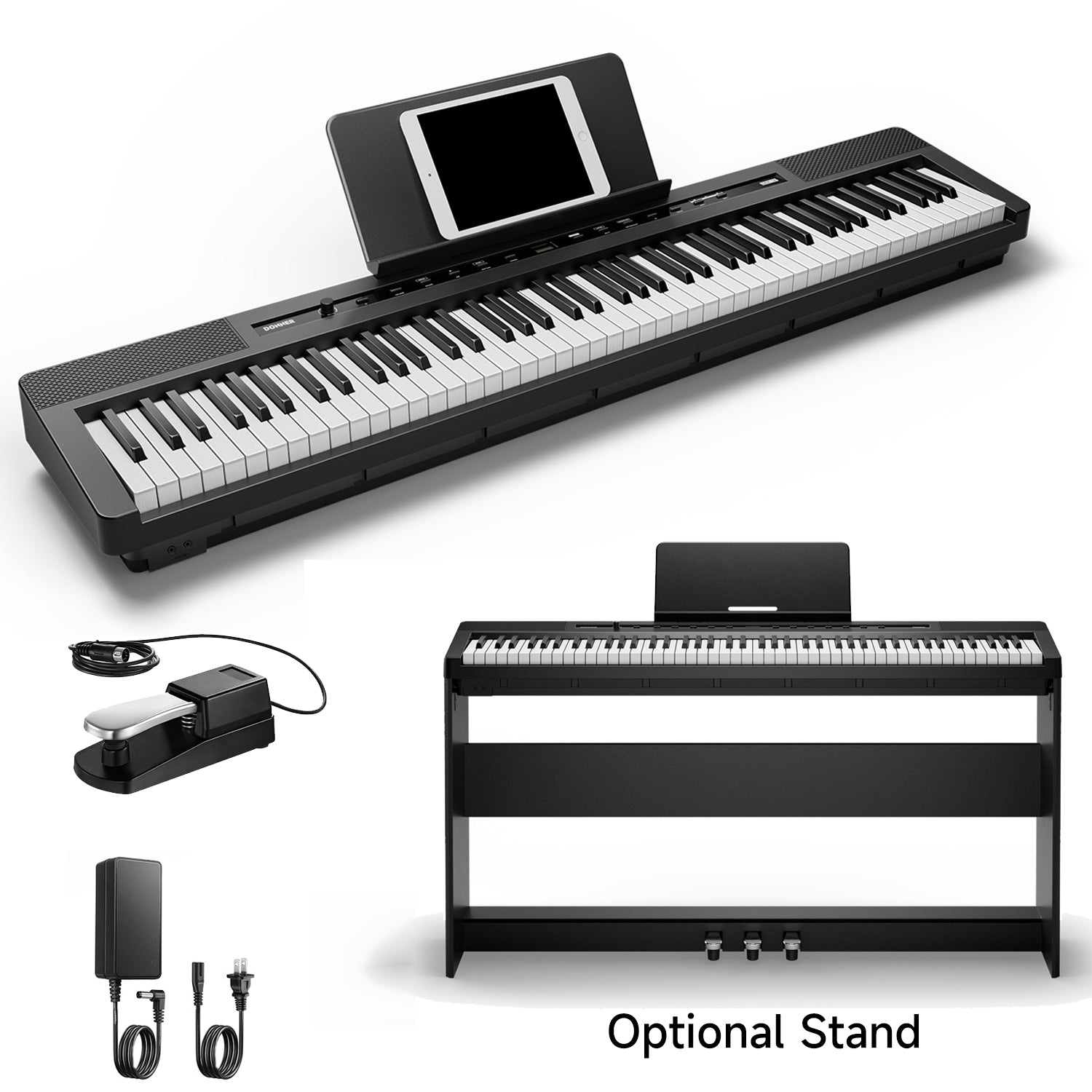
Stories like this are why we keep building the HUSH range. If you're weighing up models, our travel guitar collection puts the HUSH I PRO, the HUSH X PRO and the HUSH C side by side.
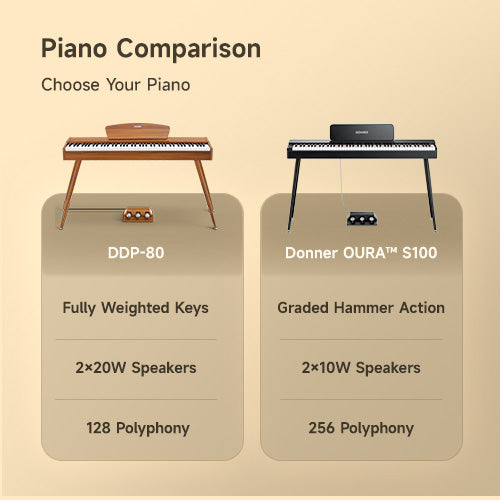
Beyond guitars, our digital piano range, electronic drums and audio gear cover the rest of a player's setup. If you play out, we'd like to be part of the load-in.