

The best first music gift begins with something the recipient wants to do. Playing an accompaniment, learning a riff and finding a steady beat each lead to different instruments, different sound paths and different space needs.
This Black Friday 2026 selection makes those contrasts practical. Across nine keyboard, guitar and electronic drum options, the useful question is which setup makes the learner’s first session possible—not which instrument is easiest for everyone.
9 Musical Gift Ideas for First-Time Players
- Donner DEP-1S digital piano
- Donner DDP-50 digital piano
- Donner DDP-95 digital piano
- Donner HLX-500 guitar
- Donner HUSH I PRO guitar
- Donner DST-152 guitar
- Donner DED-70L electronic drum kit
- Donner DED-80 electronic drum kit
- Donner DED-200 PRO electronic drum kit
Compare beginner instrument setups
| Instrument | Best suited to | Playing interface | Home setup | Price |
|---|---|---|---|---|
| Donner DEP-1S digital piano | Flexible first keyboard station | 88 semi-weighted keys | Assemble adjustable X-stand | EUR 180.99 |
| Donner DDP-50 digital piano | Weighted keys with accompaniment | 88 fully weighted hammer-action keys | Assemble stand and three-pedal unit | EUR 379.99 |
| Donner DDP-95 digital piano | Rhythm-led keyboard learning | 88 weighted keys | Home piano with accompaniment controls | EUR 445.99 |
| Donner HLX-500 guitar | Compact guitar-only upgrade | Full-scale headless electric; HSS | Add amplifier or headphone device | EUR 359.99 |
| Donner HUSH I PRO guitar | Acoustic-tone exploration | Processed steel-string silent guitar | Onboard processing and wired headphones | EUR 399.99 |
| Donner DST-152 guitar | Exploring electric sounds | Electric; HSS with coil split | Separate mini amp in standard kit | EUR 175.99 |
| Donner DED-70L electronic drum kit | Young rhythm explorers | Mesh pads; switch-pedal kick | Young-player layout; seat and listening setup | EUR 299.99 |
| Donner DED-80 electronic drum kit | Starter rhythm practice | Mesh pads; controller pedals | Starter kit lists throne and headphones | EUR 249.99 |
| Donner DED-200 PRO electronic drum kit | Hi-hat technique from outset | Mesh kit; independent hi-hat stand | Allow floor space for hi-hat and kick | EUR 699.99 |
Donner DEP-1S Flexible first keyboard station

Pros
- 88-key range
- Stand and sustain pedal
Cons
- Not hammer-action weighting
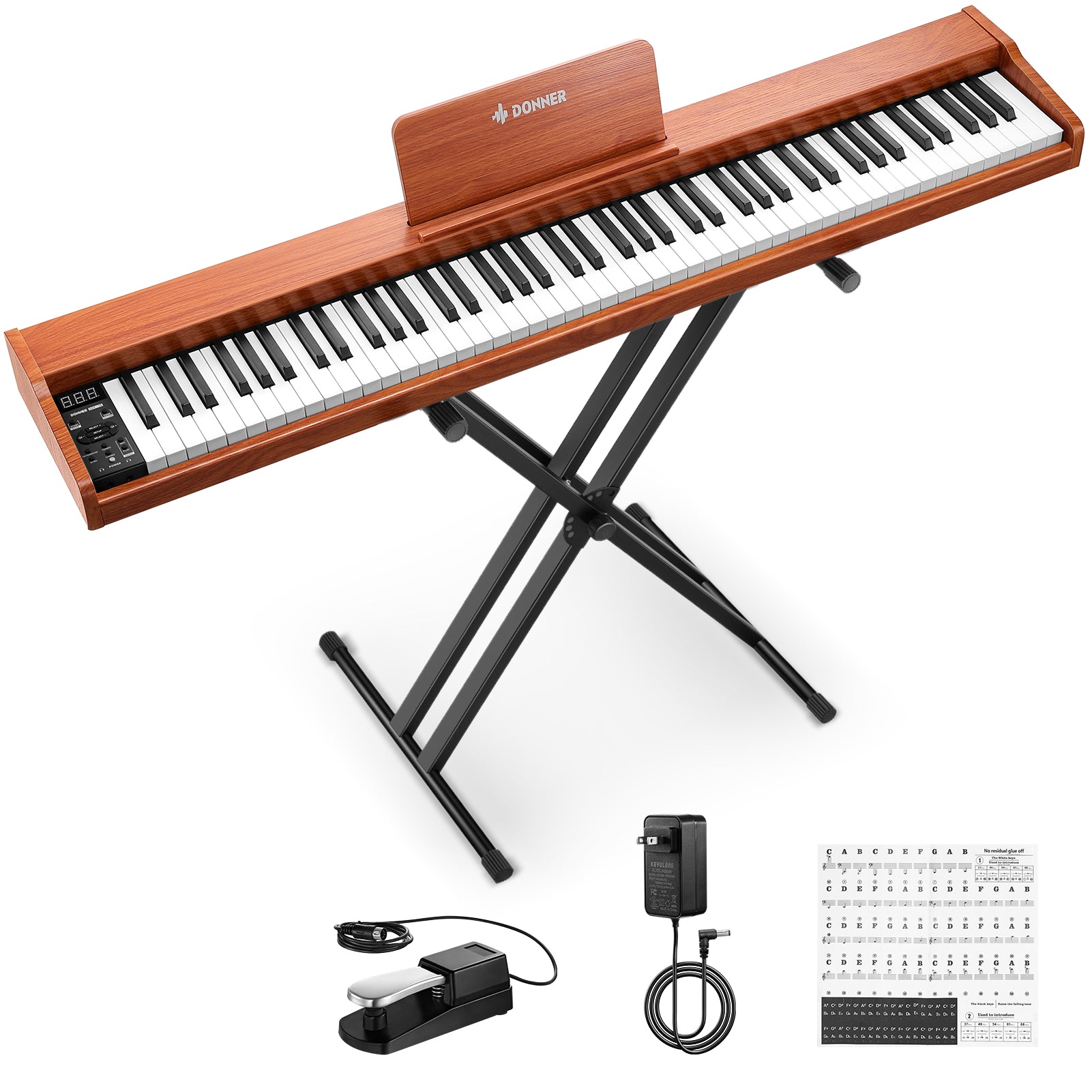
The Donner DEP-1S digital piano offers a flexible full-keyboard route when accompaniments and a movable stand fit the learner’s first activity. Its 88 keys are semi-weighted rather than hammer-action. Its semi-weighted, velocity-sensitive keys respond to how firmly they are played, with five sensitivity levels. That distinction matters when a teacher has requested a particular piano touch.
There are 128 tones, 100 rhythms and 88 demonstration songs, plus split/dual-keyboard functions, a metronome and internal recording/playback. The standard kit lists an adjustable double-X stand, single sustain pedal, music rest and power adapter, giving the full-range instrument a practical starting setup.
Donner DDP-50 Weighted keys with accompaniment

Pros
- Full-weight piano action
- Three-pedal unit supplied
Cons
- Furniture assembly required
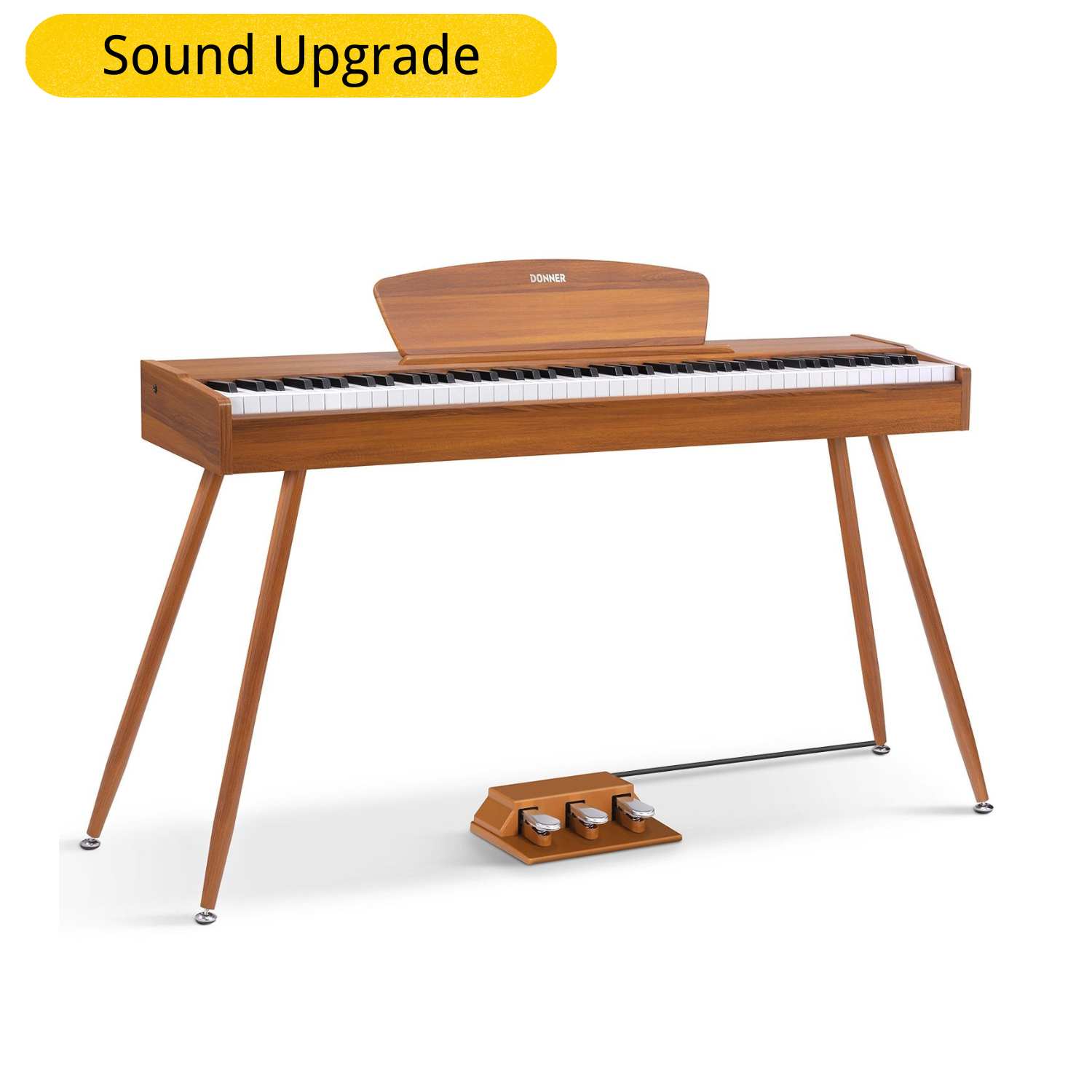
The Donner DDP-50 digital piano creates a fixed piano corner for a learner whose goal includes weighted touch and three-pedal practice. The 88 keys use fully weighted hammer action. Its 256-note polyphony—the number of notes that can sound together—supports layered playing, while reverb and chorus offer ways to change the sound.
The metronome, record/playback and layer/split functions provide useful practice options alongside 100 rhythms and 120 demonstration songs. A stand and three-pedal unit are listed in the standard box. This is a furniture-piano setup that needs assembly, not a keyboard to lift straight from the wrapping and play.
Donner DDP-95 Rhythm-led keyboard learning

Pros
- Extensive accompaniment options
- Three teaching modes
Cons
- More menus to learn
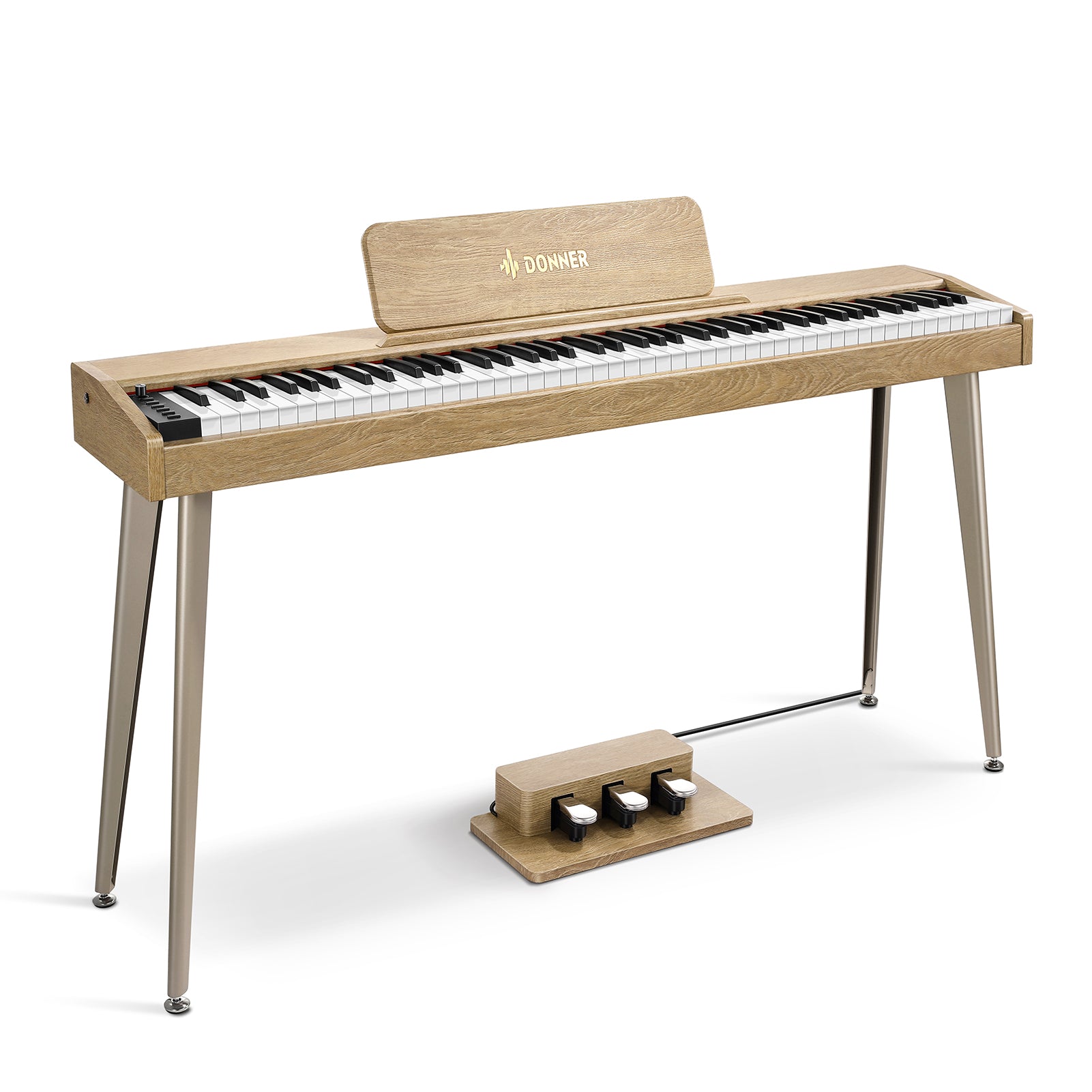
The Donner DDP-95 digital piano combines weighted keys with extensive accompaniment for someone interested in exploring different arrangements. The weighted 88-key layout offers 610 tones, 600 rhythms and 110 demonstration songs. Single-key, follow-along and ensemble teaching modes offer different ways into a piece, rather than leaving practice entirely to choosing a sound.
Split and dual tones, a metronome and onboard recording add ways to work on sections of music. Its 128-note polyphony supports simultaneous notes, and a three-pedal unit is part of the setup. The variety is attractive to an explorer, but brings more menus to learn.
Donner HLX-500 Compact guitar-only upgrade

Pros
- Full-scale compact construction
- 24-fret playing range
Cons
- Separate amplification required
The Donner HLX-500 guitar is a guitar-only first-instrument choice when an amplifier or suitable headphone device is already available. The headless body retains a 25.5-inch playing scale (the vibrating string length). Its headless bridge handles tuning, while an asymmetrical neck, rosewood fingerboard and 24 frets provide the playing layout. Two ceramic single-coil pickups and a ceramic bridge humbucker feed a five-way selector, giving the player several electric pickup combinations.
The standard box lists a fitted bag, quick-adjust strap, picks and adjustment wrench, but no amplifier. This makes the guitar a more natural addition to an existing sound setup than an all-in-one first gift; a suitable amplifier or headphone device is still needed.
Donner HUSH I PRO Acoustic-tone exploration

Pros
- Onboard acoustic-body simulations
- Wired headphone output
Cons
- Sound controls add complexity
The Donner HUSH I PRO guitar gives a steel-string learner processed sound and a direct wired-headphone practice route. Its 24.75-inch scale and 20 stainless-steel frets are paired with H-1 effects, eight body simulations and IR functions for stored sound-response profiles. Five-band EQ, Air Boost and Tone Boost give the player more ways to shape the output than basic volume and tone controls.
The 3.5 mm headphone connection suits personal listening, with a 6.35 mm output for an external sound system. Removable frames, a bag, earphones and cables are listed in the standard box. The flexibility is useful for an interested sound explorer, but brings more controls to learn.
Donner DST-152 Exploring electric sounds

Pros
- Push-pull coil split
- Starter-kit practice equipment
Cons
- More controls to learn
The Donner DST-152 guitar makes a first electric setup more concrete by listing the separate mini amp alongside the guitar. Two single-coil pickups and a bridge humbucker form an HSS layout; a push-pull control changes the humbucker response by splitting its coils. Together with the five-way selector, the advertised seven tonal options make sound exploration a real part of the gift.
The C-profile maple neck has 22 frets, with one volume and two tone controls. Its standard kit lists a separate mini amp, bag, strap, tuner, cable, capo and picks. That equipment supports a first electric setup, though the extra switching takes more learning than a simpler control layout.
Donner DED-70L Young rhythm explorers

Pros
- Switchable strike lighting
- Adjustable pad reach
Cons
- Switch pedal lacks beater feel
The Donner DED-70L electronic drum kit introduces a young player to rhythm through adjustable pads, switch pedals and lights that can be turned off. The adjustable layout includes four mesh hand-played pads and three cymbals. Strike-triggered lights provide visible feedback and can be switched off; 150 sounds, 15 preset kits and 10 songs offer material to explore.
A metronome and record/replay help a young player hear a pattern again. Two switch-style pedals control kick and hi-hat, keeping the foot controls straightforward. The trade-off is physical: the kick switch does not reproduce a beater striking a separate kick pad.
Donner DED-80 Starter rhythm practice

Pros
- Coach and play-along tools
- Starter listening equipment
Cons
- No independent kick tower
The Donner DED-80 electronic drum kit supports early drum routines with controller pedals, play-along tools and listed basic starting equipment. It combines four 6.5-inch mesh pads with three 10-inch cymbals and controller pedals for kick and hi-hat. Those pedals avoid a separate kick tower, making this a different first playing experience from a beater-operated kit.
The 180 sounds, 15 preset kits and 30 play-along songs give the learner material for regular sessions. A metronome, coach exercises and record/playback help practise timing, while the standard box lists a throne, headphones and sticks. Choose it for guided early routines, not for an independent kick-pad feel.
Donner DED-200 PRO Hi-hat technique from outset

Pros
- Independent hi-hat stand
- Larger mesh snare
Cons
- More hardware to position
The Donner DED-200 PRO electronic drum kit offers independent hi-hat hardware when that physical playing route fits both the learner’s goal and the room. Its 10-inch dual-trigger mesh snare, two 8-inch toms, 10-inch floor tom and 6-inch mesh kick offer a larger snare and separate beater-operated kick, with four cymbals around them.
The 450 sounds, 31 kits, 50 songs, metronome and coach tools support organised practice. The independent hi-hat and kick pedal also need positioning beyond the rack, so allow room for the learner’s feet and seat as well as the pads.
What changes the first-instrument choice
Match the gift to a first playing activity
Ask for a song, accompaniment or rhythm they would like to try. For a shared family gift, decide who will use it first and who will help prepare it. A keyboard, guitar and drum kit require different reach and movements, so one instrument need not be equally comfortable for every household member.
Choose keyboard versatility or a permanent piano corner
DEP-1S offers semi-weighted keys on a movable X-stand; DDP-50 brings fully weighted action and a three-pedal furniture setup. DDP-95 adds a large accompaniment library to a weighted keyboard. Choose between changing sounds, working on piano touch and developing pedal habits, rather than counting tones as a quality score.
Complete the guitar’s listening chain
HLX-500 needs an added amplifier or compatible headphone device. HUSH I PRO has onboard processing and wired headphone listening; DST-152 lists a separate mini amp in its standard kit. The useful supporting equipment is what keeps that particular listening arrangement ready for practice.
Fit the drum mechanics around the available floor space
DED-70L’s kick uses a switch, and DED-80 uses controller pedals with seating and listening items in its standard box. DED-200 PRO adds an independent hi-hat stand and beater-operated kick. Allow space for the seat, feet and separate hardware as well as the rack, because those foot actions are physically different.
Questions about music gifts
Can the DDP-95 record practice without a separate recorder?
Yes. DDP-95 has onboard recording, a metronome and teaching modes, so the learner can capture practice on the instrument without a separate recorder.
Does the DED-200 PRO need a computer for its built-in practice features?
No. DED-200 PRO’s module includes sounds, kits, songs, a metronome and coach practice. A computer is not needed for those built-in functions; use headphones or an amplified speaker to hear the kit.
Give a first instrument they can use
Choose for the first musical goal, then settle the listening route and available floor space. Compare the EUR amount with the actual setup supplied, so the present is an instrument the recipient can begin to use rather than only a promising model name.